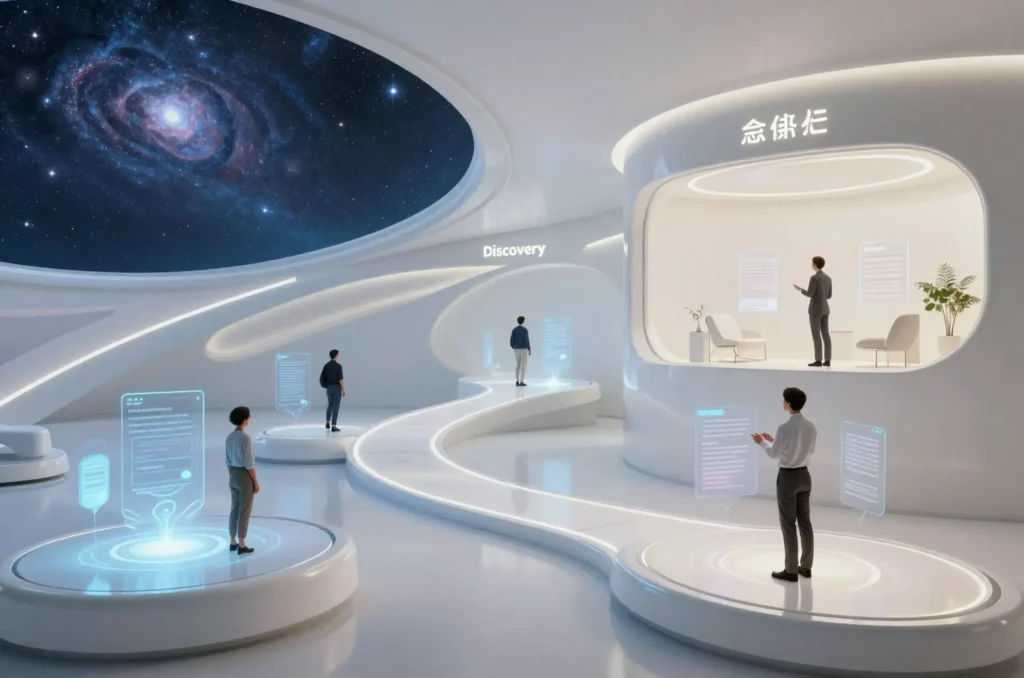
The New Era of Hyper-Personalization
In the rapidly shifting landscape of digital commerce, the traditional linear marketing funnel is dead. Today, consumers expect brands to anticipate their needs before they even articulate them. This is where automated customer journeys with AI marketing transform from a luxury into a survival requirement.
By leveraging machine learning and real-time data processing, businesses can now orchestrate complex, multi-touchpoint experiences that feel deeply personal rather than robotic. Whether you are a CMO at a scaling enterprise or an e-commerce entrepreneur, understanding how to automate these paths is the key to unlocking sustainable growth. This guide explores the sophisticated intersection of AI-driven automation and human-centric marketing strategy.
1. What Are Automated Customer Journeys with AI Marketing?
An automated customer journey is a series of interactions between a brand and a lead that occurs automatically based on predefined triggers and data-driven insights. When infused with AI, these journeys become dynamic.
Instead of a static “if-this-then-that” logic, AI analyzes vast datasets to determine the Next Best Action (NBA) for every individual user.
The Shift from Rules-Based to Intelligence-Based
- Traditional Automation: Sends an email 24 hours after a cart is abandoned.
- AI Marketing Automation: Analyzes the user’s past behavior, current intent, and even local weather to decide if a discount code, a testimonial video, or a SMS reminder is the optimal touchpoint at that exact millisecond.
2. The Core Pillars of AI-Driven Journeys
To build a high-performing automated system, you must integrate four critical technological components.
Predictive Analytics
Predictive models forecast future behavior based on historical data. AI can predict Churn Risk, Customer Lifetime Value (CLV), and Propensity to Buy. This allows marketers to allocate budget toward the leads most likely to convert.
Generative AI Content Orchestration
In 2026, automation isn’t just about when to send a message, but what the message says. Generative AI creates thousands of variations of ad copy, email subject lines, and product descriptions tailored to the psychological profile of the recipient.
Real-Time Behavioral Triggers
AI monitors “micro-moments.” If a user lingers on a pricing page for more than 40 seconds, the system can trigger a live chat assistant or a personalized pop-up offering a consultation, significantly reducing friction in the customer journey.
Unified Data Layer (CDP)
Without clean data, AI is blind. A Customer Data Platform (CDP) aggregates data from social media, email, offline sales, and website behavior into a single “Golden Record” for each customer.
3. Mapping the AI Journey: From Awareness to Advocacy
To maximize automated customer journeys with AI marketing, we must look at how AI enhances each stage of the lifecycle.
| Stage | AI Application | Key Benefit |
| Awareness | AI-optimized programmatic ads | Lower Cost Per Acquisition (CPA) |
| Consideration | Dynamic website personalization | Higher engagement rates |
| Conversion | Predictive lead scoring | Focused sales efforts |
| Retention | Automated replenishment triggers | Increased repeat purchase rate |
| Advocacy | AI-driven referral programs | Organic brand growth |
Awareness: Reaching the Right Person
AI tools analyze lookalike audiences with surgical precision. Instead of broad interest targeting, AI identifies “twin” profiles of your best customers across social platforms, ensuring your top-of-funnel spend isn’t wasted.
Consideration: The Power of Dynamic Content
When a user returns to your site, AI changes the homepage layout. If they previously looked at “winter hiking boots,” the hero banner shouldn’t show “summer sandals.” This level of AI marketing integration creates an immediate sense of relevance.
4. Why 2026 is the Year of the “Predictive Journey”
We have moved beyond reactive marketing. The industry is now embracing Predictive Journeys. According to recent studies, companies utilizing predictive AI in their automation see a 25% increase in marketing ROI.
Expert Insight: “The biggest mistake brands make is thinking AI replaces the strategy. AI is the engine, but your brand’s unique voice and empathy are the steering wheel. Without a human-centric strategy, your automated journey is just a faster way to annoy your customers.” — Dr. Elena Vance, AI Strategy Consultant.
Unique Perspective: The “Privacy-First” Automation
A common oversight in automated customer journeys is the balance between personalization and privacy. In 2026, the most successful journeys use “Zero-Party Data”—information customers intentionally share (like quiz results or preference centers). Automation built on consent-based data sees 3x higher trust scores than those relying on third-party tracking.
5. Overcoming the “Cold Start” Problem in Automation
Many businesses struggle when they don’t have enough data to train an AI model. This is the “Cold Start.”
How to solve it:
- Start with Hybrid Rules: Use basic logic while the AI gathers data.
- Synthetic Data: Use AI-generated datasets to simulate customer behavior and train your initial models.
- Focus on High-Intent Pages: Start your automation on checkout or pricing pages where the data signal is strongest.
6. Top Tools for AI Marketing Automation in 2026
- HubSpot AI: Excellent for mid-market B2B lead nurturing.
- Salesforce Marketing Cloud (Einstein): The gold standard for enterprise-level predictive journeys.
- Klaviyo: Specifically optimized for e-commerce and SMS automation.
- Braze: Leading the way in mobile-first, real-time cross-channel engagement.
7. Frequently Asked Questions (FAQ)
What is the difference between marketing automation and AI marketing?
Marketing automation follows a set of rules (If X, then Y). AI marketing learns from data and adapts the journey in real-time without needing constant manual updates to the rules.
Is AI marketing automation expensive for small businesses?
No. Many SaaS platforms now offer “AI-lite” features in their basic tiers, making automated customer journeys accessible to businesses of all sizes.
Will AI replace marketing managers?
No. AI replaces the repetitive tasks (data entry, A/B testing, scheduling), allowing marketing managers to focus on high-level strategy, creative direction, and brand storytelling.
Take the First Step Toward Intelligence
Building automated customer journeys with AI marketing is no longer a futuristic concept; it is the current standard for digital excellence. By focusing on predictive analytics, unified data, and a commitment to user privacy, you can create experiences that delight customers and drive revenue.
The transition may seem daunting, but the cost of inaction—becoming irrelevant in a hyper-personalized world—is far higher. Start by auditing your current journey and identifying one friction point where AI can provide immediate clarity.
Ready to revolutionize your strategy? Start by implementing a predictive lead scoring model today and watch your conversion rates soar.